Planning Was Never the Hard Part
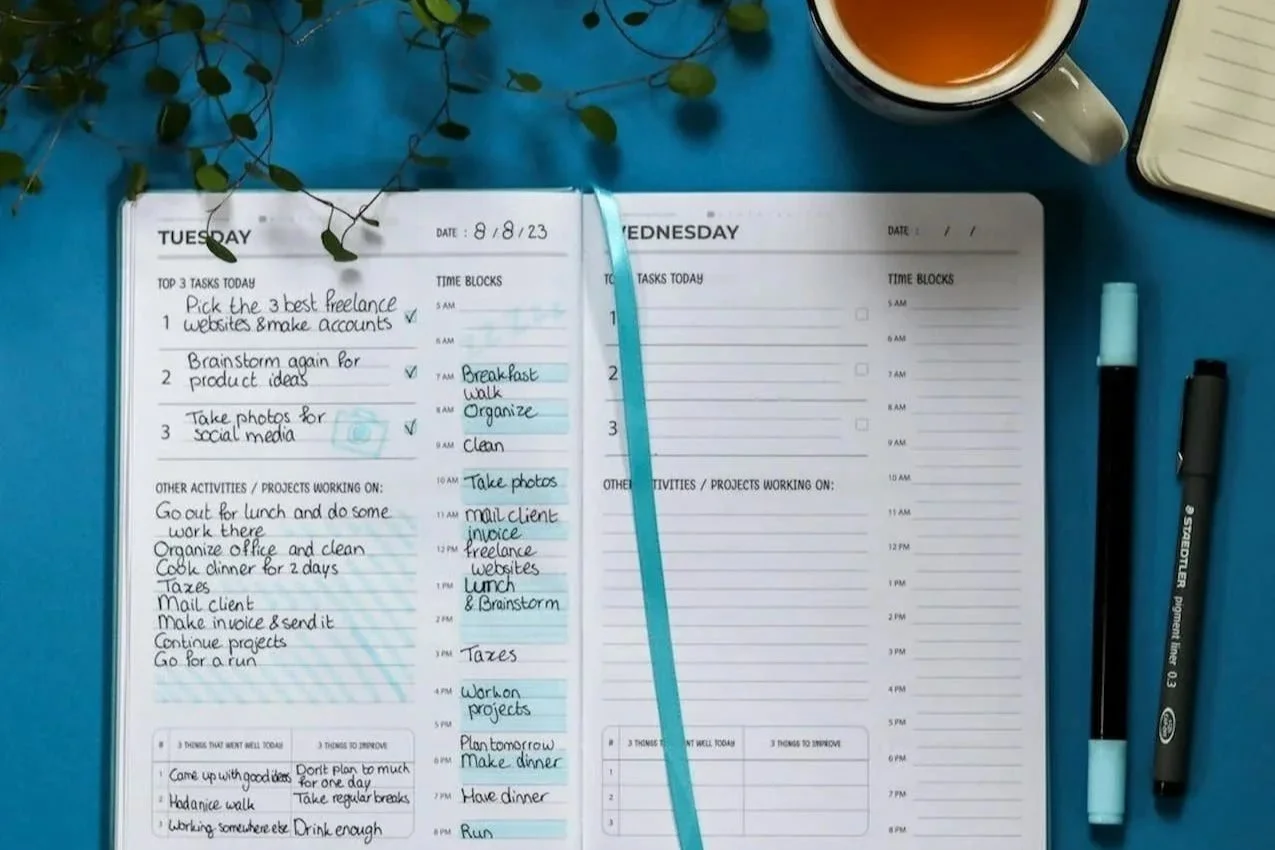
Lists. You have several.
You’ve reviewed, organized, and prioritized everything on your plate. The plan is clearly outlined. On paper. Maybe even color-coded.
The starting point is obvious.
This is the easy part: knowing what needs to be done.
The hard part is starting.
You’re not avoiding it. You’re just not moving.
Your internal voice labels this laziness. A lack of discipline. Or it admonishes you: You know better. You can do better.
But the gap between knowing and doing isn’t about willpower—and it isn’t a character flaw.
Something else is happening in that space between the plan and the first step.
You Know This Feeling
The workout clothes have been laid out since Sunday. It’s Thursday.
There’s a conversation you’ve rehearsed a dozen times—in the shower, in the car, right before falling asleep. You still haven’t had it.
The email would take ten minutes. It’s been sitting open in a tab for a week, and you’ve read the draft so many times you could recite it.
From the outside, these things look simple.
But some tasks aren’t just logistical. They’re carrying old weight—the fear of getting it wrong, of being judged, of disappointing someone, or of finally trying and finding out it doesn’t work.
And when a task carries that kind of weight, moving forward can feel less like completing a task and more like stepping into something emotionally risky.
You know exactly what to do.
You even genuinely want to do it.
But some part of you doesn’t feel safe enough to move forward yet.
That part isn’t checking your list or weighing the pros and cons. It’s not noticing how reasonable the task actually is.
It’s responding to what the task represents.
Being seen. Getting it wrong. Making a decision you can’t take back. Finding out whether you can actually do the thing you’ve been telling yourself you should do.
So you stall.
You freeze.
You reorganize the list instead.
You find something else that suddenly feels urgent.
This is why “just do it” has never been a particularly useful answer.
You’re not missing information. You’re not short on discipline.
You’re standing at the edge of something that feels riskier than the task itself would suggest—and no amount of knowing what to do next changes how that edge feels.
What If Being Stuck Is Information?
When you’re really stuck—not just busy—it can be tempting to turn immediately toward self-criticism.
Why can’t I just do this?
What’s wrong with me?
Why do I keep doing this?
Try a different question:
What does this task feel like it’s asking of me?
Not logistically.
Emotionally.
Is it asking you to risk being seen? To risk getting it wrong in front of someone? To make a decision? To let go of control? To finally find out whether the thing you’ve been avoiding actually works—or doesn’t?
You may not get a clean answer right away.
That’s okay.
The question itself does something self-criticism never could: it treats the stall as information instead of a failure.
And sometimes, that shift is where something begins to change.
You Don’t Have to Out-Logic It
None of this means you are stuck forever.
It means you’ve been trying to out-logic something that was never a logic problem to begin with.
The plan was never the hard part. You already know that.
The hard part was the space right before the first step.
And if moving forward has come to feel emotionally risky, it makes sense that simply knowing what to do hasn’t been enough to make yourself do it.
That doesn’t mean something is wrong with you.
It means there’s something worth paying attention to.
You don’t have to fix it by tomorrow. You don’t have to force yourself through it. And you don’t have to turn another unfinished task into evidence that you’re failing.
Next time you catch yourself reorganizing the list instead of starting, pause.
Notice the stall.
Ask what the task is actually asking of you.
And let that be enough, for now.
Written by Carminda Passino, LCSW
If my writing resonates with you, you’re welcome to stay in touch. I’m Carminda Passino, LCSW, and I share updates every so often—when something feels genuinely supportive or worth passing along.